ABOUT MOTHER BOARD

MOTHER BOARD

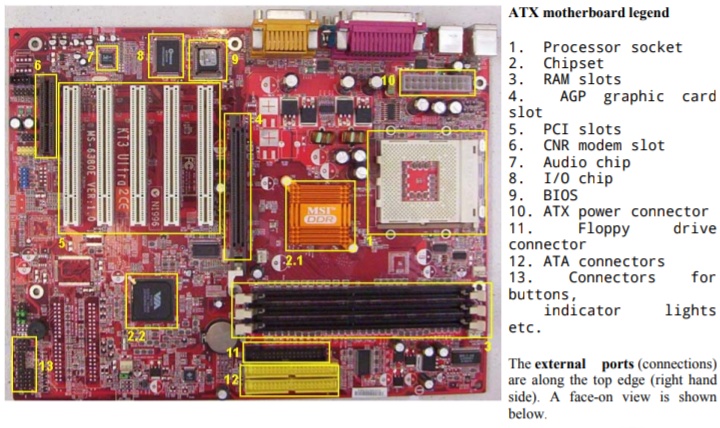
A motherboard is an electronic circuit board in a computer which interconnects
hardware devices attached to it — which is to say, all of the system hardware. At a
minimum it includes one or more Central Processing Units (CPU), and the main
processing activity of the computer takes place on it.

It was called a”mother” board in relation to these. A PC motherboard generally has a series ofslots, allowing to be plugged in directly to CPU. Other connectors on themotherboard allow communication through cables with various peripheral devices,
both inside and outside the computer case

Ports
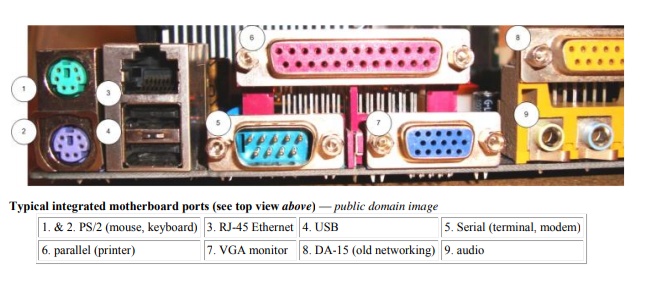
Ports

Ports are used by a motherboard to interface with electronics both inside and outside ofthecomputer.Integrated ports arethose that are part of, directly wired to, the motherboard. Internal integrated ports are used to connect devices inside the
system unit. Externalports may be connected to the motherboard directly (integrated) or by circuit boards that are inserted
into slots on the motherboard. It is often possible to add new external ports by inserting such a circuit board into an openslot.

Ps/2
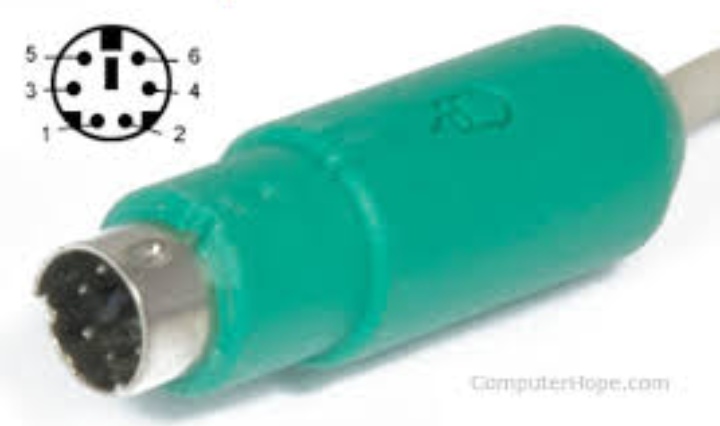
PS/2

PS/2 ports were for connecting peripherals such as your mouse and
keyboard to the computer, but are now outdated. PS/2 based mouse and
keyboards have now been replaced by USB ports as the popular standard. This trend for USB over PS/2 started in circa 2004.

RJ-45
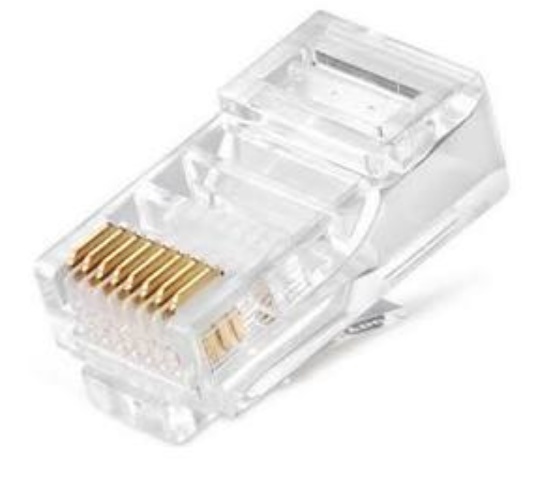
Rj-45

RJ45. An 8-pin/8-position plug or jack is commonly used to connect computers onto Ethernet-based local area networks (LAN). Two wiring schemes–T568A and T568B–are used to terminate the twisted-pair cable onto the connector interface.

USB
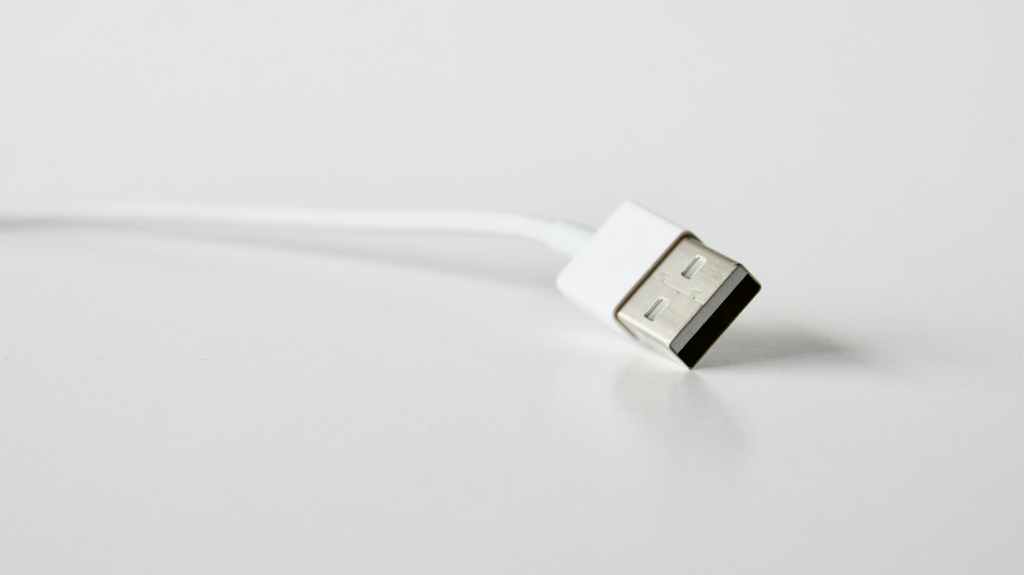
Usb

USB or Universal Serial Bus, is a connectivity specification, currentlyat
version 3 (V3). They are very common today, connecting flash drives and many peripherals. Modern desktop systems have should have 4-8 on the back of thecomputer and at least two on the front.USB is one of the most successful interconnect in computing history. V1 operates at1.5 Mbps (low speed) or 12 Mbps (full speed), V2 (high speed) at 480 Mbps, and
V3 (super speed) at up to 5Gbps. It can be found in over 2 billion PC and mobiledevices. USB has strong consumer brand recognition and a reputation for ease-of-
use.

Serial
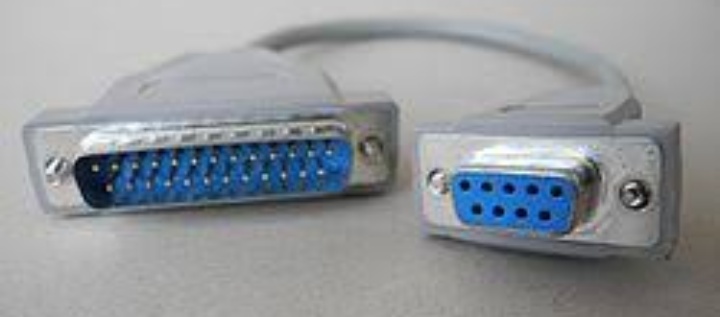
Serial port

An outdated piece of technology, serial ports (5 above) were most often used to connect the mouse and keyboard. By circa 2000, most personal computers stopped
relying on serial ports and were replaced by PS/2 and/or USB ports.
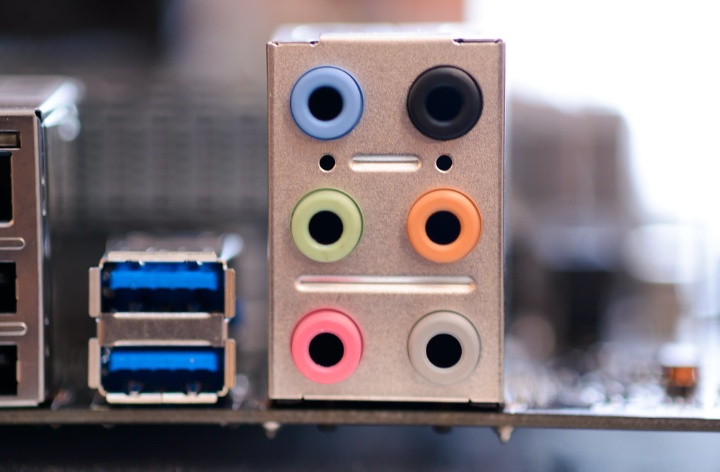
Audio port

AUDIO PORT

The audio input and stereo output ports connect to external speakers, a
microphone, head sets, and possibly a game. The external ports are color codedby industry standard.

Firewell
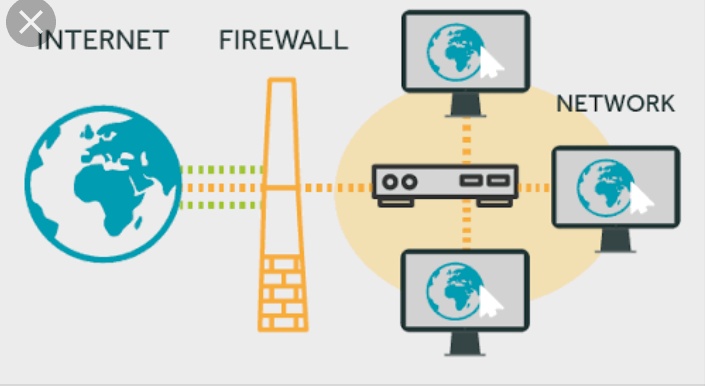
Firewall

Technically known as the IEEE 1394 interface, but dubbed by Apple as Firewire this connection medium hoped to surpass USB in terms of speed and popularity. While it did outperform USB v2 in speed tests, uptake was very limited due to the existing widespread use of USB.
Firewire is the standard for high definition audio and video transfer and may be found on many digital camcorders. Also known by the brand names i.LINK and Lynx
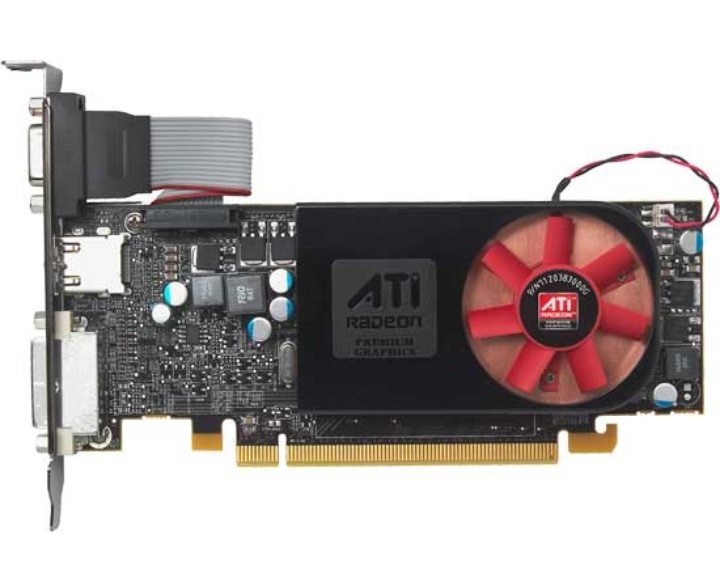
Graphic card

Graphic card

Graphics cards are also called video cards or a video adapter. They are in all PCs, but may be integrated on the motherboard. Graphic cards generate output images that can be displayed on the monitor. While many graphics cards are built into the
motherboard these days, enthusiasts will invest in stand-alone graphics cards with more powerful processing capabilities. This allows for heavy image editing, or better rendering and frame rates in computer games.
Graphics cards are designed to offload rendering from the CPU. Graphics cards are powered by the motherboard and require a PCI-X or PCIe slot to install. Some cards
require more power and thus will need a 6-8 pin connector that runs directly to the power supply. Graphics cards also include on-board memory for efficient rendering. Typical sizes include 128-1024MB of memory. Today, high end graphics cards have
multiple core processors that are largely parallel to increase texture fill and process more 3D objects in real time.

Sound card
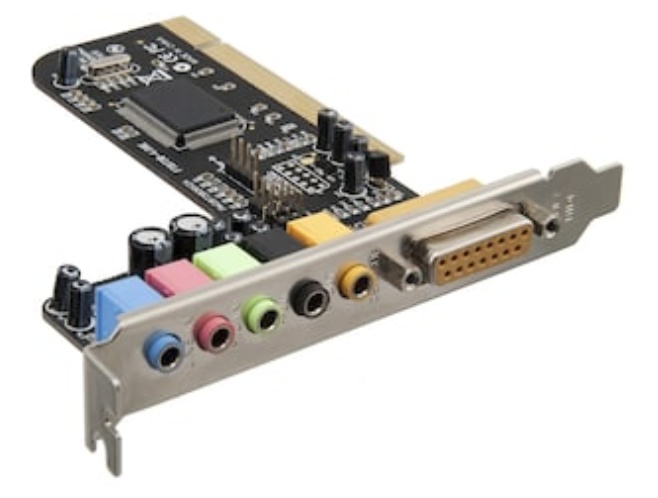
Sound card

A sound card, also referred to as an audio card, facilitates the input and output of
audio signals to and from a computer under the control of computer programs.
Sound cards for computers were uncommon until 1988, which left the single
internal PC speaker as the only way early PC software could produce sound and
music.
Uses of a sound card include the audio component’s for multimedia applications
such as games, video/audio editing software and music composition. Most
computers today have sound capabilities built into the motherboard, while others
require additional expansion cards

Network Interfrace Card
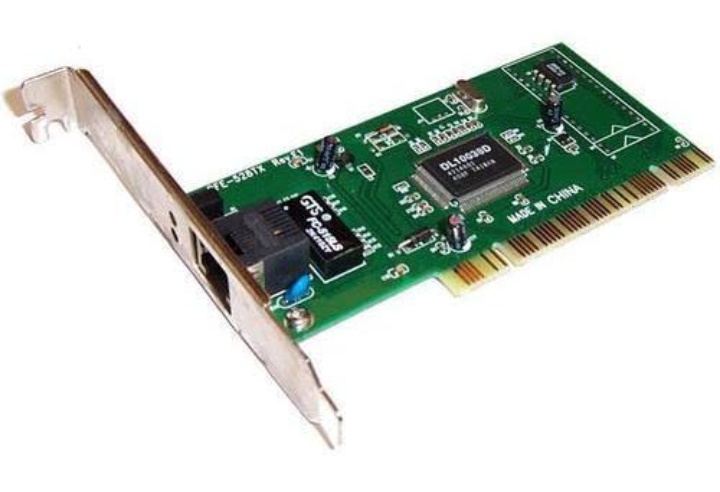
Network interface card

A Network Interface Card (NIC), also called a network card, network adapter, orLAN Adapter is a piece of computer hardware designed to allow computers to communicate over a computer network. Used for remote communication via cable. Data is transmitted over a cable network. The NIC connects computers to the
Internet.

Express card
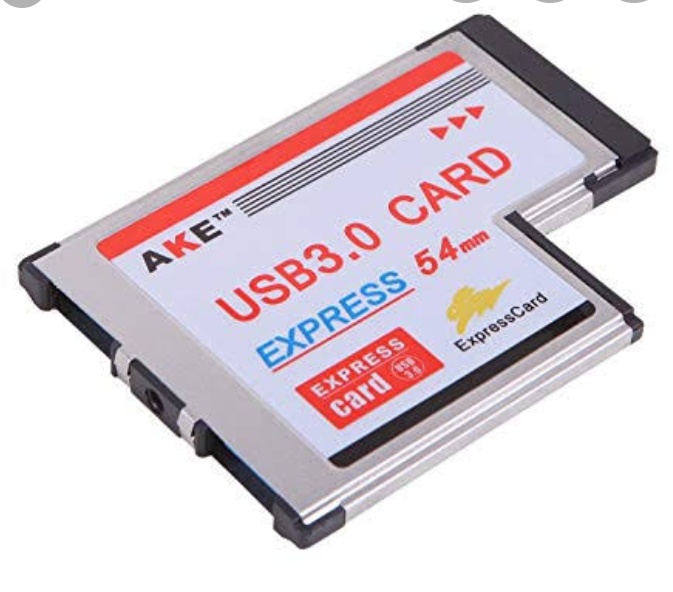
Express card

The ExpressCard and slot is used primarily on laptop computers.
It replaces the older PC Card (also called PCMCIA). The ExpressCard comes in two sizes, although the ExpressCard/34 may be used in an ExpressCard/54 slot.
VIRUS

Viruses are completely different from all other microorganisms. These can be
observed under electron microscope only. They are present almost everywhere.
A virus is a tiny infectious particle that can reproduce only by infecting a host
cell. Viruses behave like a non-living material outside of a host body. In order to
live and reproduce it is essential that the virus enters inside a living cell. After
entering into a host cell it uses the resources of host to make more viruses. They do
so as they cannot reproduce by their own (without a host). That is why these are
called intracellular parasites.
Virus cannot reproduce because they do not have any cell; they are just a
packaging of a nucleic acid and protein. These are very small in size, much
smaller than the size of a living cell.
STRUCTURE OF VIRUS
There are a lot of different viruses in the world but they vary in their size, shape
and life cycle. However they have some features in common those are as follows:
 A protective protein shell or capsid.
 A nucleic acid genome made up of DNA or RNA enclosed by the capsid.
 A layer of membrane called envelope (not for all viruses).

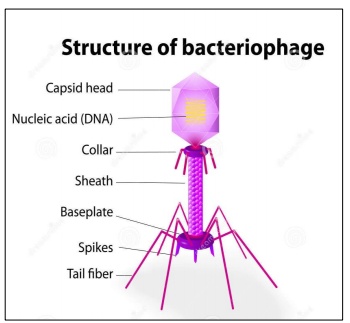
The body of a
bacteriophage is divided
into three parts:
i) Head
ii) Neck and hollow core
iii) Tail fibres
i) Head: The head is
hexagonal in shape. It
consists of a protein called
Capsid. Capsid encloses
the genetic material i.e.
DNA. They do not have a
cell membrane, nucleus
and cytoplasm.
ii) Neck and hollow core: The neck/collar helps in attachment of the virus
body to the head. The hollow core allows the passage of genetic material
enclosed within the capsid.
iii) Tail fibres: Spike like structures called tail fibres are present at the end of
the hollow core. They are attached to the hexagonal base plate. The tails fibres
help in adhering to the host cell.

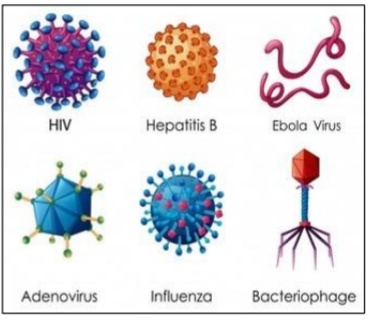
There are numerous viruses other than bacteriophage which can cause many fatal
diseases in other living organisms. A few
of them are as follows:
 HIV – AIDS
 Hepatitis B – Hepatitis B
 Ebola – Ebola virus disease
 Adenovirus – Respiratory illness
 Influenza – Flu
 Polio virus – Polio
 Varicella-zoster virus – Chicken pox

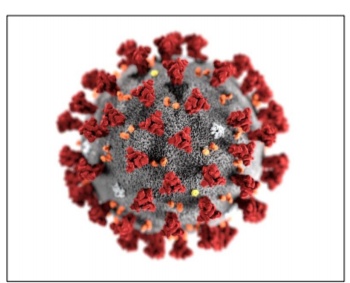
Corona Virus

Apart from these the most popular
virus now a day is NOVEL
CORONA VIRUS or
SARS CoV – 2
The disease caused by this is
Corona Virus Disease 2019
(COVID – 19)
This COVID – 19 is declared to be
a PANDEMIC.
This virus is best known for its
high contamination ability. Though its death rate is less than other viruses, its
contamination rate is far higher than any other viruses. The region which is mainly
affected by this virus is our respiratory system.

VIRAL INFECTION

A viral infection means that many viruses are using your cells to make more copies
of them. The viral lifecycle is the set of steps in which a virus recognizes and
enters a host cell, “reprograms” the host by providing instructions in the form of
viral DNA or RNA, and uses the host’s resources to make more virus particles.
Then these new virus particles exit from the host cell and infect other cells.

COMPARISON OF VIRUS AND BACTERIA

Even though they can both make us sick, bacteria and viruses are very different at
the biological level.
 Bacteria are small and single-celled, but they are living organisms that do
not depend on a host cell to reproduce like the viruses do.
 That is why bacterial and viral infections are treated very differently. For
instance, antibiotics are only helpful against bacteria, not viruses.
 Bacteria are also much bigger than viruses.

About Microscope

Microscope is a instrumentsthat help to enlarge minutes(micro = very small) organisms or their parts. A microscope not only presents 
a magnified view of the object but also ‘resolves’ it better.
Resolution is the feature which makes it possible to differentiate between two 
points present close together in the objects being viewed. The first 
microscope was constructed by Anton Van Leeuwenhoek (1632-1723). 
This, microscope consisted of a single biconvex lens fitted in a small window 
of a “board” and the object was viewed through it. This was a simple 
microscope.
After this compound microscopes were developed using combinations of two 
lenses. Improvements continued, newer and newer’ microscopes were 
designed and are still being improved. Different types of microscopes that are 
being used for different biological studies from the beginning are as follows:
1) Simple microscope
2) Compound microscope
3) Electron microscope
4) Phase contrast microscope
5) Interference microscope.


10 Interesting facts

1. Chalk is made from trillions of microscopic plankton fossils

2. Their are more tree on Earth than stars in our galaxy

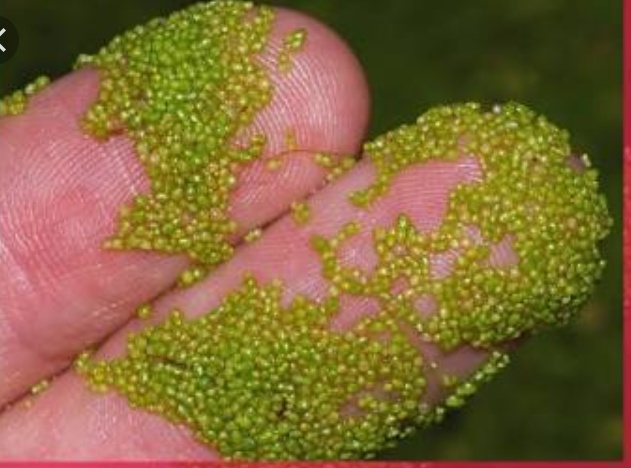
3. The world smallest fruit a UTRICLE is the size of a smallest ant

4. About 6,000,00 ponds of space dust settle on Earth every year

5. Elephant are the only animal that cannot jump

6. 20% of Earth’s oxygen is produced by the Amazon rainforest.

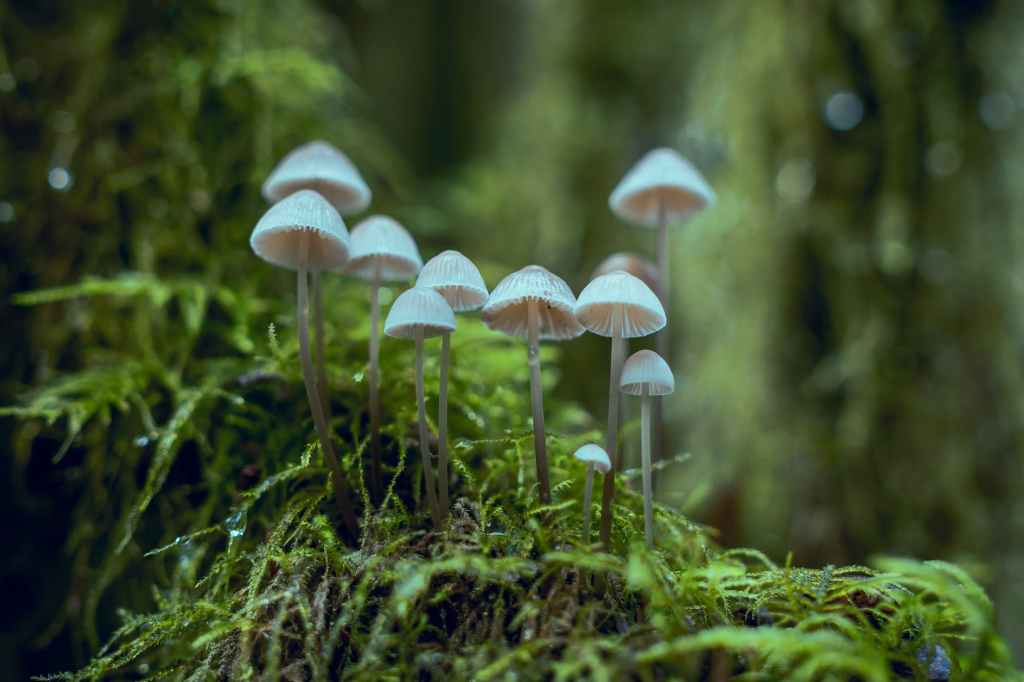
7. There is a great mushroom in Oregon that is 2,400 year old. It covers 3.4 square miles of land and is still growing

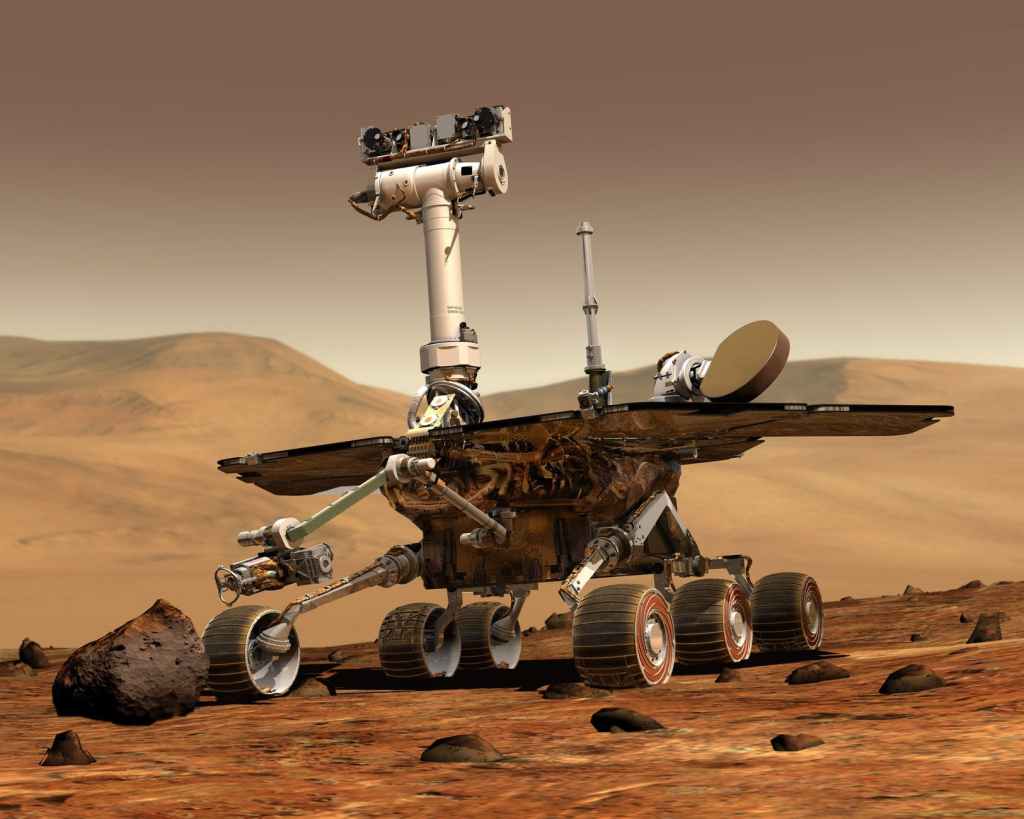
8. At least 12 rock’s from Mars have landed on Earth.

9. Every day is about 55 billionths of second longer than the day before it.

10. A flea can accelerate faster than the space shuttle.

Design a site like this with WordPress.com
Get started